At your service in Huntsville
Transmission Fluid Service Huntsville
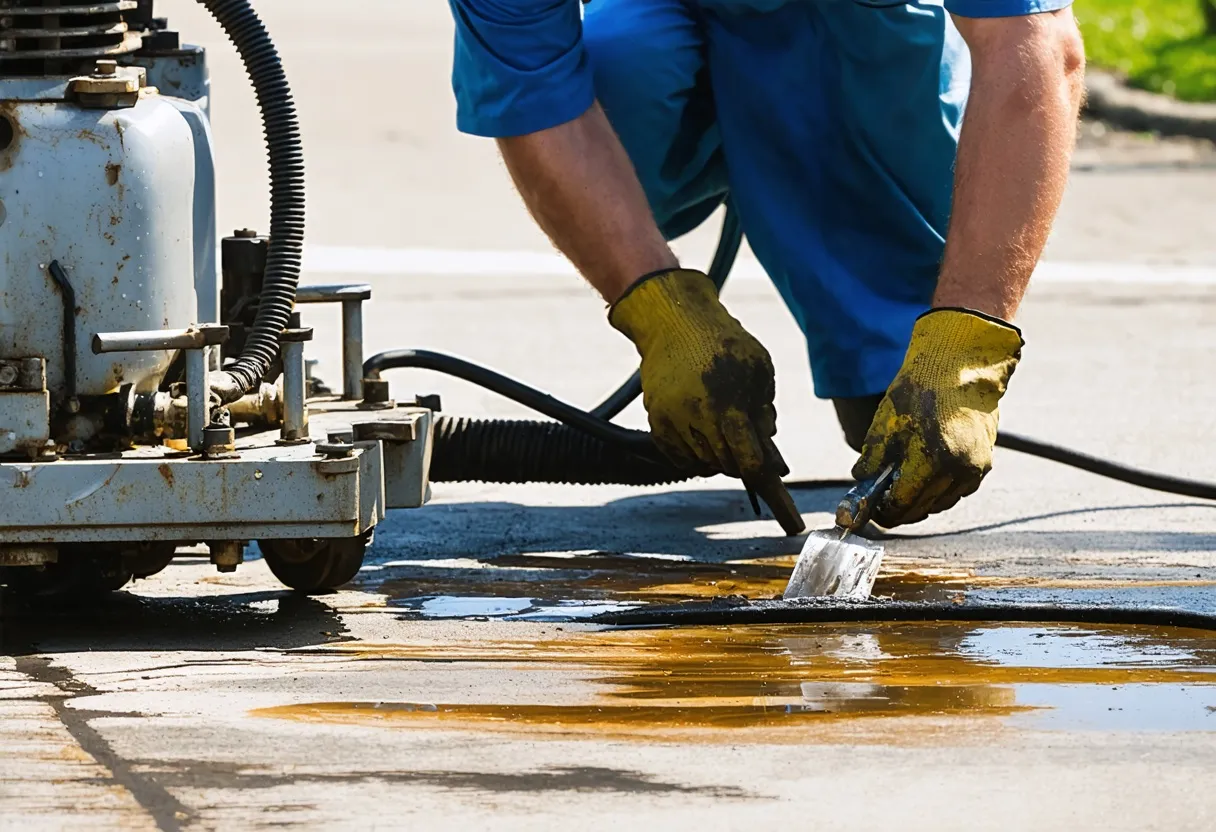
Ask ten different shops what a "transmission fluid service" includes and you'll get ten different answers — and in Huntsville, where Memorial Parkway traffic, Madison commutes, and stop-and-go stretches through South Huntsville put real heat stress on a transmission year-round, that inconsistency matters more than it should. Fluid that's simply drained versus fluid that's fully cycled through the torque converter and cooler lines are not the same job, and the difference tends to show up two years later as either a smooth-shifting transmission or an unplanned rebuild.
This page is built around one question: what actually needs to happen when you bring a vehicle in for fluid service, and how fast can a shop tell you whether it's routine maintenance or something already headed toward trouble? We lead with same-day diagnostic responsiveness because fluid condition is itself diagnostic information — the color, smell, and debris in what comes out of your pan tells us more in a few minutes than a mileage number ever could, which is why we look before we quote.
01What's Actually Happening Inside Your Transmission Between Fluid Changes
Transmission fluid is doing three separate jobs at once inside an automatic transmission, and most drivers only ever think about one of them. It lubricates gear sets, bushings, and bearings the same way engine oil protects an engine. It carries heat away from clutch packs and bands that engage and disengage dozens of times during a single drive, acting as a cooling medium as much as a lubricant. And it serves as the hydraulic fluid that actually applies the pressure needed to shift from park through every forward gear — which means a transmission doesn't shift on gears alone, it shifts on fluid pressure and clean friction material. When fluid loses viscosity or picks up contamination, that third job is the first one to suffer, and it shows up as delayed engagement, flare between shifts, or outright slipping long before anything is mechanically broken.
Heat is what ages fluid fastest, and heat exposure isn't distributed evenly across every commute in this area. A driver running Memorial Parkway during peak traffic morning and evening is putting the transmission through repeated heat-cycling that a steady highway commute to Madison, AL simply doesn't generate — every stop-start cycle keeps the torque converter working with nowhere for that heat to dissipate quickly. Errands and short trips around South Huntsville, and the stop-and-go pattern typical of the Putman Drive NW corridor, add the same kind of stress in smaller doses that compound over months rather than years. None of this shows up on an odometer. Two vehicles with identical mileage can carry very different fluid condition depending on which kind of driving put those miles on.
That's a big part of why "lifetime fluid" language on some manufacturer service stickers deserves a skeptical read rather than blind trust. Those ratings are typically built around ideal, low-heat, mostly-highway driving conditions — not the mixed city, commute, and stop-and-go pattern that describes how most vehicles in this area actually get driven. A transmission technically covered by a lifetime fluid spec can still be running fluid that's oxidized, discolored, and stripped of its friction-modifying properties well before it reaches the mileage where problems are supposed to start. By the time that shows up as a slip or a rough shift, the fluid has usually already been part of the problem for a while — it just hadn't been loud about it yet.
This is also why we treat a fluid service as a diagnostic opportunity rather than a routine box to check. Pulling a pan, when the transmission design allows it, means physically looking for metal shavings or clutch material rather than assuming clean fluid because the mileage looks reasonable. A pan that comes back clean tells us the transmission is aging normally. A pan with visible debris changes the conversation entirely, and it's better to have that conversation before a service than to discover afterward that a routine job masked an early warning sign.
02Signs Your Transmission Fluid Needs Attention Now
03How Same-Day Diagnostic Response Works for a Fluid Service Call
We ask what you're noticing, when it happens, and under what driving conditions before the vehicle is even on a lift, so we know exactly what to check first.
Color, smell, and pan debris are checked directly rather than assumed from mileage, since two vehicles with identical odometer readings can have very different fluid condition.
Once we've actually seen the fluid and pan, we tell you plainly which service fits your transmission's real condition instead of defaulting to the more expensive option.
Pricing and scope are explained in writing before service starts, including what would change if we find something unexpected once we're inside the pan.
We confirm shift quality across the gear range and check for leaks after the service so you're not the one discovering a problem on the drive home.
04Straight Answers, Nothing Held Back
Every fluid service starts with an honest look at what your transmission actually needs — not a generic flush sold to whoever walks in. You get a written estimate and warranty terms before work begins, every time.
05Choosing Between a Fluid Change and a Full Flush — and When to Do Either
A drain-and-fill removes the fluid sitting in the pan — typically less than half of the total fluid volume — and replaces it with fresh, manufacturer-specified fluid. It's the lower-risk option, and it's often the right call for a transmission with unknown service history, because a full flush pushes fluid through the torque converter and cooler lines under pressure, and that pressure can occasionally dislodge sludge that's been quietly sealing a worn gasket or seal. If we don't know how a transmission has been treated over its life, the honest move is to default to the more conservative service first and reassess once we've actually seen the fluid and pan condition, rather than assuming the more thorough job is automatically the safer one.
A full flush cycles fluid through the entire system rather than just what settles in the pan, displacing nearly all of the old fluid rather than the roughly 40-50% a drain-and-fill reaches. It's the right choice for a transmission that's overdue for service and still showing reasonably healthy fluid color with no metal contamination in the pan — in other words, a transmission that's simply behind schedule rather than one already showing signs of internal wear. The decision isn't about which service costs more or which one we'd rather sell; it's about which one matches the specific condition of the transmission in front of us, and that's something we check by looking rather than by guessing off a mileage chart.
On timing, most standard automatic transmissions call for fluid service somewhere in the 30,000 to 60,000 mile range under normal driving conditions, but "normal" is carrying a lot of weight in that sentence for anyone driving in this area regularly. If your daily route includes recurring Memorial Parkway congestion, regular towing, or mostly short trips around South Huntsville that never let the transmission fully cycle through a steady heat pattern, that interval can reasonably shrink toward 15,000 to 30,000 miles. CVTs and dual-clutch transmissions frequently need attention more often than a conventional automatic and require fluid formulated specifically for that transmission's design — a generic ATF substitute is a mistake that can cause shifting problems serious enough to look like a much bigger issue than a simple fluid swap.
Manual transmission gear oil holds up longer under normal use, typically stretching toward the 30,000-60,000 mile range depending on driving style and clutch usage, but it isn't maintenance-free — gear oil breaks down under heat and load on a slower curve than automatic fluid, not a nonexistent one.
If you don't know your vehicle's fluid history — a common situation with a used vehicle purchased without full records, or one inherited from a previous owner — the honest approach is to treat it conservatively: inspect the fluid and pan first, then recommend a service level that matches what we actually find rather than what the odometer alone would suggest.
06Fluid Service Questions Huntsville Drivers Actually Ask
The honest answer depends on what's actually in the pan — fluid color, smell, and any metal debris tell us more than mileage alone, so we inspect before recommending either service.
Sometimes, if the slip is caused by degraded or low fluid rather than worn internal components. A proper diagnostic check, not just a fluid change, is how we tell the difference before recommending a fix.
Not always. On a high-mileage transmission with unknown history, old fluid can sometimes be masking a worn seal, and a full flush can occasionally expose a leak that wasn't obvious before. We check first and recommend the more conservative option when that's the case.
It depends on the transmission — Dexron, Mercon, CVT-specific fluid, and various synthetic blends are not interchangeable, and using the wrong one can cause shifting issues that mimic a bigger problem. We use manufacturer-specified fluid for the vehicle in front of us, not a generic stock fluid.
Same-day, in most cases. Fluid inspection, a scan tool check, and a road test are usually enough to tell you whether you're looking at a fluid issue or something more involved, and we explain it before recommending any repair.
Yes — we regularly see vehicles from South Huntsville, the Putman Drive corridor, and commuters coming in from Madison, AL, in addition to Huntsville proper.
07Warranty Terms and Service Area — What's Actually in Writing
Warranty language in transmission repair is often left deliberately vague, so we keep ours specific and written down at the time of service rather than promised verbally and forgotten later. Standard fluid and maintenance services carry a 6-month, unlimited-mileage warranty, because putting normal miles on your vehicle after a fluid service shouldn't cost you coverage. Gasket and seal work performed during a fluid service carries a 90-day reseal warranty on the specific repair area, and any major repair work that comes out of a diagnostic carries a 12-month/12,000-mile warranty, whichever comes first. All of it is handed to you in writing, not left as something you have to take on faith.
We serve Huntsville proper along with South Huntsville, the Putman Drive NW corridor, and commuters driving in from Madison, AL — vehicle patterns repeat across these routes, and seeing the same commute stress on a regular basis is part of what makes a fluid condition assessment faster and more accurate the first time, rather than a guess based on generic mileage charts.
If your transmission is shifting fine and you're simply due for maintenance, or if something already feels off and you want a same-day answer on whether it's fluid, a seal, or something more serious, the process starts the same way: we look at the fluid before we tell you what it needs. Call to schedule a fluid service or diagnostic appointment, and ask for the current written estimate and warranty terms before any work begins — that's how it should work every time, not just when you ask.
Request Your Quote
Free, itemized, and no pressure to move forward.
Get An Itemized Quote
See exactly what a repair would cost before you decide anything.